Brain Awareness Week 2026: Toolkit for children launched
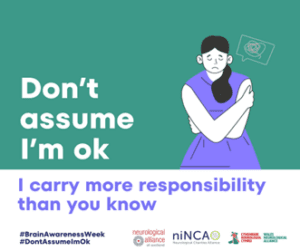
This Brain Awareness Week (16 -22 March), a number of neurological charities have come together to raise awareness of the mental health challenges of children affected by conditions like MS, epilepsy and Huntington’s, with the launch of #DontAssumeImOk – a nationwide campaign highlighting the often hidden mental health impact of neurological conditions on children and young people.
The campaign by the Neurological Alliance of Scotland together with the Wales Neurological Alliance, the Northern Ireland Neurological Charities Alliance and their member charities across the UK, urges all those working with children and young people to actively recognise how neurological conditions may affect mental health and to take proactive steps to ensure every young person feels seen, heard, and supported – never assuming they are ok.
Throughout Brain Awareness Week, the campaign will share powerful stories from children and young people and their loved ones as well as a practical downloadable toolkit designed to help professionals recognise concerns, start conversations, and confidently respond to the needs of children and young people impacted by these complex and often life changing conditions.
Key statistics: mental health and social support not meeting need
In a recent report on the experience of people living with neurological conditions and their carers, Today’s Challenge, Tomorrow’s Hope, the Neurological Alliance of Scotland found that despite the deep emotional impact of neurological conditions, the mental health and social support available for children and young people is still falling short for those living in Scotland:
- Nearly seven in ten carers of children and young people with neurological conditions said that mental health services are not meeting their child’s needs.
- One in five children cannot access any mental health support at all.
- Only 7% of carers agreed that their child’s care from social services had improved in the past year and 58% disagreed that current social support meets their needs at all.
- Parents describe the frustration of watching their child be misunderstood or unsupported because teachers are not equipped to manage the realities of a neurological condition.
New downloadable toolkit launched
The new toolkit, available in standard and Easy Read versions, calls on teachers, health professionals, social workers, youth workers, and anyone supporting children and young people to:
- Be informed: Understand how neurological conditions can impact mental health
- Don’t assume, ask: Never assume that a child or young person is ‘ok’.
- Listen: Notice nonverbal cues and subtle emotional changes. All behaviour communicates something—withdrawal, irritability, perfectionism, or absences may signal distress or masking.
- Be proactive in supporting children and young people. Use wellbeing indicators to assess needs, be confident in signposting to further support, and include children and young people in conversations and decisions about their future.
The toolkit signposts professionals to further resources and support where they can learn more. You can download the toolkit here.
Downloadable toolkit
A downloadable toolkit and case studies from the #DontAssumeImOK campaign are available from the Neurological Alliance Scotland. They are calling on on teachers, health professionals, social workers, youth workers, and anyone supporting children and young people to be informed about how neurological conditions can affect mental health and never assume that a child or young person is ‘ok’.