Success Looks Different Award

Celebrating all forms of success
Created by the Inclusion Ambassadors, and managed by Children in Scotland, the Success Looks Different Awards support the Scottish Government’s commitment to recognise and appreciate success for pupils with additional support needs, and the forms this takes, as outlined in their Additional Support for Learning Action Plan.
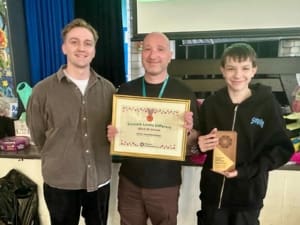
Our 2025 winners
The year’s awards received incredible entries from 26 nurseries, primary, secondary and special schools from across Scotland. The Inclusion Ambassadors, who created the awards in 2022, reviewed the entries and selected their winners across the four school categories.
- Early Years – ELU Hamilton
- Primary School – Buchanhaven Primary School
- Secondary School – Duncanrig Secondary School
- Special School – Parkhill Secondary School
-
This year’s awards looked a little different
Prior to kicking off the planning for the Success Looks Different Awards 2024-25, the Inclusion Ambassadors reflected on previous years’ awards. They decided it was important to provide more opportunities to hear directly from children and young people about how their school made them feel included.
The 2024/25 application process included an Engagement Pack that encouraged schools to work directly with their pupils on their entry. The pack supported children and young people to highlight the things they liked about how their school celebrates success, and schools and nurseries could submit their views in any way they liked. Teachers and staff were then asked to provide some supporting information about how the things pupils highlighted met our success criteria:
- Evidence of celebrating individual success and positive relationships
- Evidence of creativity and doing something different
- Evidence of sharing success with the wider community
- Evidence of respecting and promoting children’s rights
- Recognition through awards or certificates
-
The judging process
To review the entries and decide winners, the Inclusion Ambassadors met together as a group in Glasgow.
Working alongside Children in Scotland staff, the Inclusion Ambassadors engaged with each entry – reading written entries, watching videos and PowerPoints, looking at pictures and photographs – and awarded them up to three stars for how well they met each success criteria. They then discussed the highest scoring school or nurseries and selected their winners!
The Inclusion Ambassadors discussed their thoughts on each entry in-depth and made notes on what things they liked about every school or nursery.
Once the winners were chosen, ambassadors had a chance to help design the winner certificates and work with staff to film video and audio snippets sharing some of the best things that stuck out to them from the entries.
One of the Inclusion Ambassadors involved in the judging process reflected: “It was a good day, I really enjoyed it. Choosing the schools was amazing and it was a lovely safe space.”
-
What stood out across the applications
This year’s awards made it clear that across Scotland, schools and nurseries are supporting their pupils to engage with all kinds of success. Across the entries, there were some key ideas that stood out:
Building relationships
Taking time to get to know their pupils was a strength of many of our entries. Understanding a pupil’s needs, strengths, and interests helps create opportunities for success that are truly meaningful for them.Show-off spaces
We liked that lots of the entries had noticeboards, posters, and other visual spaces around their schools and nurseries where pupils’ achievements were showcased and celebratedThinking outside of the classroom
Learning doesn’t all need to happen in the classroom – many of our entries showed there are many ways to use outdoor opportunities to learn, from riding bikes to planting a garden.Getting creative
Across our entries we saw drawings, paintings, collage, and digital creativity, like videos and voice notes, that really impressed our Inclusion Ambassadors.Innovative awards
While SQA exams are important, many of our entries also had other achievements, badges, and awards for their pupils to work towards – celebrating skills like kindness, hard work, and teamwork.Shouting about success
There were a range of ways used to spread the word about successes with parents, carers, and the local community, including newsletters, postcards, online spaces, and social media.Children’s rights led
All schools in Scotland have a duty to uphold children’s rights, but we were impressed by the entries that directly engaged pupils in understanding, recognising, and celebrating their rights.
Spotlight on this year’s winners
Early Years Winner
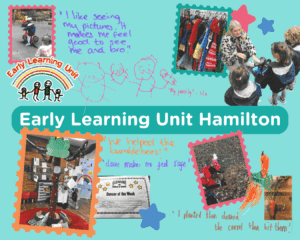
ELU Hamilton, South Lanarkshire
The Inclusion Ambassadors were particularly impressed with ELU Hamilton’s achievement tree. They noted how it offers a focal point for displaying daily celebrations and recognising children’s achievements from both nursey and home. The group also loved the sound of the edible yard, where children can grow, use and share their own produce with the wider community.
Primary School Winner
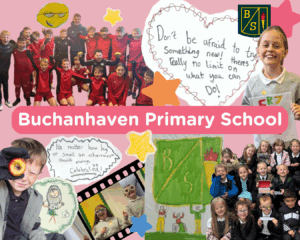
Buchanhaven Primary School, Aberdeenshire
The Inclusion Ambassadors chose Buchanhaven Primary School as winners of the Primary School category due to the positive language and quotes included in their application. The group also highlighted the broad range of achievements that the school recognise, their strong community links and the Thrive Hive, where children engage in a range of new experiences.
Secondary School Winner
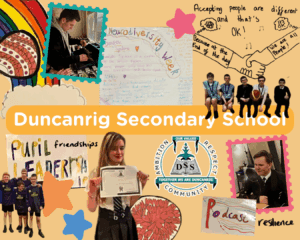
Duncanrig Secondary School, South Lanarkshire
The Inclusion Ambassadors were particularly impressed with how strongly pupils’ voices came through in Duncanrig Support Base’s application. They were also inspired by the vibrancy and detail on display in the school wall displays that share pupils’ achievements, testimonials, experiences and other creative pieces.
Special School Winner
Parkhill Secondary School, Glasgow
Parkhill School was crowned winner of the Special Schools category, with the Inclusion Ambassadors particularly impressed with the straightforward approach of their application and how they mapped out things they were doing across the school building. The group also liked that the Parkhill shared things they loved about their own school and how much of what they do is about making pupils ‘feel good’.