AC26 interview: Keynote speaker Laura Anderson on engaging young people on climate and sustainability

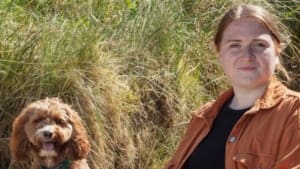
Environmental activist and scientist Laura Anderson, known online as Less Waste Laura, spearheaded the successful campaign to ban disposable vapes in the UK. Ahead of her keynote speech at Children in Scotland’s Annual Conference in May, we sat down with her to discuss climate education, overcoming “news fatigue” and the power of social media

This interview is an excerpt from a longer piece published in the latest edition of Children in Scotland Magazine, our biannual publication for members.
Interview by Caitlin Logan
Caitlin Logan: Do you think enough is being done in schools to teach children and young people about climate and sustainability?
Laura Anderson: I think it’s come on a lot more than when I was at school. I learned about a lot of these concepts and now young people are learning a lot more. But I would love to see schools being able, as much as possible, to get kids outside, not just learning from a textbook or PowerPoint presentation. There are schools that do projects like food growing or school gardens and these sorts of things, which are fantastic. However, often that is because there’s one or two members of staff that are passionate about it, rather than something that is across the school curriculum.
CL: One of the challenges of engaging the general public around these issues can be “news fatigue” and a sense of overwhelm about where to start. Do you see these challenges among children and young people?
LA: I think they see just as much as we see. It might be coming through different channels, but they’re hearing about a lot of these stories. And you’re right, climate change is a difficult topic because, on one hand, it’s always happening, but often it can feel far away and it doesn’t feel like it’s happening at all. At certain times of year when there’s extreme flooding, we hear a lot about climate change, but then we often forget about it when we get into the lovely spring. These problems are across all generations. It’s easy to lose momentum when you maybe aren’t seeing the changes you were wanting, whether that’s locally, nationally, or internationally.
It’s about talking about small wins and saying, what are some of the great local initiatives and what are the positive changes?
CL: Do you have any thoughts on how we can overcome that?
LA: Part of it is not always having it as a standalone topic, but trying to embed it in all conversations. So, whether we’re talking about food or fashion or travel or whatever it might be, trying to talk about sustainability as a natural part of those conversations. It helps people see that all these different areas and sectors have a part to play.
It’s also about talking about small wins. Often climate change is this huge issue and it takes years, decades, and many countries coming together to shift that. So it’s about saying, what are some of the great local initiatives and what are the positive changes? There are amazing charities and community groups doing stuff all the time that is positive for the environment. And the Scottish Government do put in place lots of new legislation trying to tackle these things. It’s talking about that in a way that people understand. That helps bring the messaging along and bring people along too.
CL: You’ve used social media a lot in your campaigning. Do you have thoughts on how social media can be used as a way of forming community, and how that can be used for positive change?
LA: I know for me, being in Scotland, sometimes you can feel removed if things are happening in London or elsewhere. Social media is a way of finding people that might not be close by, so it’s helpful being able to break down some of those barriers, and you can find out about great campaigns and information. Online communities are a great way to build momentum, stay in touch, and diversify everything you’re doing. It’s a great way to create community, but it’s not community on its own. One of the things I like about social media is that you can then build something that is in the real world, where people can come together and connect.
CL: You’ll be the keynote speaker at the upcoming Children in Scotland annual conference. What’s the key message you’ll want people to take away from your speech?
LA: The title of my talk will be ‘What Comes Next? Creating Change with Confidence’. So, I’ll share a bit about my experience as an environmental campaigner, but I particularly want to share that creativity and collaboration were two of the biggest parts of my recent campaigns and why I think we ended up getting legislative change. So, hopefully getting people thinking how they could step a bit more into that campaigning space, and about how children and young people can come into their work. I know many of them will be working directly with children and young people, but that doesn’t always translate to them being embedded in the work. It is also about “getting it right for every child”, so, building communities where everybody – children and young people especially – can feel safe, healthy, active, all that stuff, and encouraging everybody to see the environment as a key part of that.
For more information about Laura’s work as an ethical influencer and campaigner, go to lesswastelaura.com
Annual Conference 2026
Laura Anderson will be joining us in Glasgow in May to give her impassioned keynote, ‘What Comes Next? Creating Change with Confidence’.
You can also join us for two inspiring days as we once again bring together the best of Scotland’s children’s sector.

Become a member
Our biannual Magazine is just one of the many benefits you can enjoy by taking up membership with Children in Scotland.