Visible Voices: Elevating Scotland’s most marginalised young people
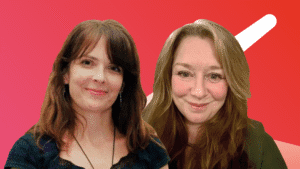
At the tail end of last year, we sat down with Karen Gebbie-Smith, an experienced specialist educator from Ashgrove Children’s Centre in Aberdeen, and Dr. Maggie MacAskill of the University of Strathclyde, to discuss the development, purpose and future of Visible Voices, a project emerging from Scotland’s National Complex Needs Network. In conversation with Communications Officer, Innes Burns.
Working in partnership with practitioners across Scotland, Visible Voices champions voice and agency by supporting the meaningful inclusion of non-speaking learners. It focuses on identifying and removing barriers to participation, while helping staff to notice, interpret, and respond to non-verbal communication such as eye gaze, facial expression, and smiles, strengthening relationships between learners and educators.
Karen and Maggie took time out their busy schedules to meet with me and explain what the project is all about and where the inspiration came from.
Two simply wonderful human beings, by the way. I wish I had all afternoon.
The birth of the Visible Voices project
Visible Voices emerged from the National Complex Needs Network, a rapidly growing Education Scotland supported community that now includes hundreds of professionals across the country. Maggie explained its origin.
“We cannot expect engagement if children are not able to express what they find engaging… They need to have means of agency, means of a voice. Karen had already indicated a passion for raising the voices of young people with the most exceptional presentations:
“Someone said, Maggie, you need to connect with Karen, and that was that.”
Together Karen and Maggie refined the project’s focus. Their concern was with children who have the most complex communication profiles, including those who may express themselves only through a small movement or change in breathing.
“How on Earth do we listen to those children?” Karen asked. “How can they tell us what matters to them?”
Their answer was a set of co-produced case studies involving real children, real interactions and practical examples of how these children’s visible voices can shape education and society.
Impact across Scotland
The project grew with national ambition, achieving representation from the Highlands, the islands, the central belt and the Borders.
Karen described her own case study, working with the Aberdeen Art Gallery to support a child named Precious. Precious’s responses, interpreted through careful observation, prompted major changes in how the gallery handles and displays its collections.
“She was so involved we had to stop the recorded session after half an hour… She gifted them so much.
“Not only has Precious’s voice affected her own lived experience, but it has underpinned a cultural change within the art gallery.
“The collections team are not going – is this a red object or an orange object, anymore… They have created a whole display of things you can touch.”
How to access Visible Voices and who it’s for
At present, the toolkit is available online and is designed for teachers, social care staff and parents. There are also a wealth of resources on YouTube.
The long-term vision is much broader, with more materials to be added over time. The project advances professional learning and, critically, the human rights of children with complex needs, especially Article 12 of the United Nations Convention on the Rights of the Child and the right to be heard.
“We would like to spread the word far and wide around the voices of our young people,” Maggie said.
What happens next?
Phase Two of the project is now underway. Upcoming plans include an online sensory story celebration for participating children, new professional learning sessions, a national charter and continued development of the resource bank.
“We do not want to give up yet,” Maggie said. “We have more to do.”
Karen agreed: “Definitely, definitely, definitely.”
Roots in a lifelong passion
Trigger warning: some readers may find the following topics distressing
With thirty-five years in specialist education, Karen’s commitment is deeply rooted in personal experience. She recalled arriving at secondary school at age twelve and witnessing her maths teacher action corporal punishment. She said:
“As a little 12-year-old, I felt the rise inside my body, knowing that that was not right… I said, ‘Excuse me Mr Wood, they’ve done nothing wrong.
“At 12 years old I knew that was not socially just.”
She remembers the teacher replying, “I do not usually hit girls, but I might start with you.”
This moment, Karen said, became a deeply rooted value and the beginning of a lifelong determination to stand against injustice. She now works with the city’s central ASN team, supporting developments across the city, and is passionate about supporting people to enhance the lived experiences of our youngsters with complex additional support needs.
Maggie, who grew up in a small rural school, shared a similar early awakening to social justice.
“My passion actually started at a very similar age… I read a book about autism and thought, I have never met this kind of person.
“My mother volunteered with a local club for people with Down syndrome. It was called the Happy Club… I got to know some just amazing young characters.”
Maggie also spoke openly about now knowing she is neurodivergent and how this shaped her sense of justice.
“Feeling so different and seeing other people who were different… it was a way to process my own feelings about my own difference… I have a very clear sense of justice and not justice.”
Challenging nostalgia about old school authority
Today, debates about behaviour and authority in schools often invoke nostalgia for harsher discipline. Neither Karen nor Maggie sees any value in that view. They worry that young people with additional support needs are portrayed in the media as the problem, when the real issues lie in “the structure, the policy and the resourcing of the education system.”
“You cannot teach someone to respect others by hurting them,” Maggie said.
Karen added: “You can never punish ASN out of a child… It is caring and understanding approaches we need, not authoritarian ones.”
Both emphasised the need for teacher training aligned with human rights, neurodiversity and social justice rather than compliance-based systems.
A final reflection
Throughout the conversation, both specialists returned again and again to a central idea…
Young people with the most complex needs should not only be included but should be listened to, respected and recognised as contributors to their communities.
Karen summarised the philosophy simply.
“Our children have got things to teach us.”
Visible Voices is ensuring that Scotland is beginning to listen.
About Visible Voices
Karen Gebbie Smith, an experienced specialist educator from Ashgrove Children’s Centre in Aberdeen, and Dr. Maggie MacAskill of the University of Strathclyde, together created Visible Voices, a project emerging from Scotland’s National Complex Needs Network. Working in partnership with practitioners across Scotland, Visible Voices champions voice and agency by supporting the meaningful inclusion of non-speaking learners. It focuses on identifying and removing barriers to participation, while helping staff to notice, interpret, and respond to non-verbal communication such as eye gaze, facial expression, and smiles, strengthening relationships between learners and educators.