Powering empowerment
About the author
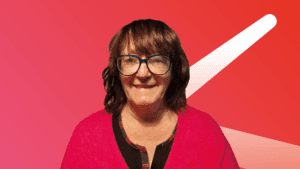
Shirley Thomson is an Advocacy Worker for Partners in Advocacy.
Partners in Advocacy helps Scotland’s children, young people, adults and older people have their voices heard through independent advocacy.
Alongside Enquire, Children in Scotland and Cairn Legal, Partners in Advocacy is a partner in the My Rights, My Say service.
At the point of initial introduction to a young person, the advocacy worker is aware that, by then, they are between eight and eleven years into their education journey. Often, the presenting advocacy issue is wrapped up in the young person’s – and their family’s –experiences of the preceding years. This can frequently leave a young person feeling in some way responsible for their difficulties. The first thing the advocacy worker does is listen. They hear their stories around their journey in education. Only then can the worker begin to try and understand the presenting advocacy issue.
The worker will begin by explaining what advocacy is and what it is not. Once a young person decides that they would like to try working in partnership, a mandate is signed. The advocacy worker sends an introductory letter and mandate to the Additional Support for Learning lead of the relevant local authority. They then write to the school and say they are going to work in partnership with the young person to have their views heard in school.
A copy of the support plan is then requested to act as a starting point in discussion with the young person – if that is something that would be helpful for them to share. Everything we do is at the request of the young person and we are guided and informed by them.

This sets the partnership in motion. That word – partnership – is inherently the key to the continued success of My Rights, My Say: we work in a collaborative way and young people feel that. As advocacy workers we are experienced in looking holistically at the information we are given. We are aware that many young people can have similar sounding presenting issues but experience them in unique and individual ways. Getting to the heart of their experience transcends any support plan or verbal guarantees from education staff stating that adequate and appropriate support is in place. If the young person does not experience that support, in the way it is intentioned, we must then explore – in partnership with schools – what could be done differently to support the young person in the way they need to access their education.
After working with as many as 1000 young people, it could be disheartening. However, we know that the need for advocacy services has always been there, and we prefer to frame this as the natural result of word simply spreading. The end result is the increased empowerment of young people to have their voices heard, and we are so proud of the work we do with our young people and the achievements we have helped to facilitate.
My Rights, My Say
Children in Scotland is a partner in the My Rights, My Say service, helping children aged 12-15 with additional support needs to be involved in decisions about their education.