Health Inequalities: Participative Research with Children and Young People
Children and young people across Scotland had the opportunity to question the then First Minister, Nicola Sturgeon, in April 2019. In 2018, 100 children and young people attended the first FMQT Next Generation, where young people were able to put their questions to the First Minister, covering topics such as mental health, education and youth homelessness, as well as less serious questions like her thoughts on the new Irn Bru recipe.
About the project
The project aimed to:
- Understand how social determinants of health impact on children and young people at a community level and drive health inequalities.
- Develop a set of recommendations for use by both local and national policymakers to create communities that support better health and wellbeing and help reduce health inequalities.
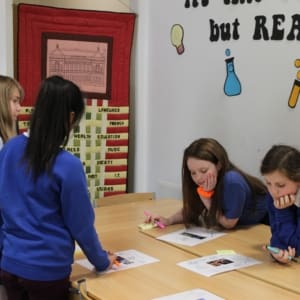
We worked with 16 young peer researchers throughout the project to explore these issues. The researchers were based in Dalmarnock Primary School, Glasgow and Baldragon Academy, Dundee.
The researchers chose to focus on the following 3 topics:
- Safety
- Littering
- Family and Friends.
The researchers conducted focus groups and visually documented their communities. We then worked together to analyse the data, identify themes, offer solutions and make recommendations. The young peer researchers also supported us to develop the final project report and the animation that visually records their findings.
In February 2020 Children in Scotland launched the final project report at an event at Tynecastle Stadium.
Videos
Health Inequalities: Peer research into the role of communities
Children in Scotland was funded by the Wellcome Trust to support a group of 15 young peer researchers aged from P6 to S2 level to explore the role of community and place in health, wellbeing and inequalities. This project report shows what we learned from working with pupils at Dalmarnock Primary School in Glasgow and Baldragon Academy in Dundee.